Recipes
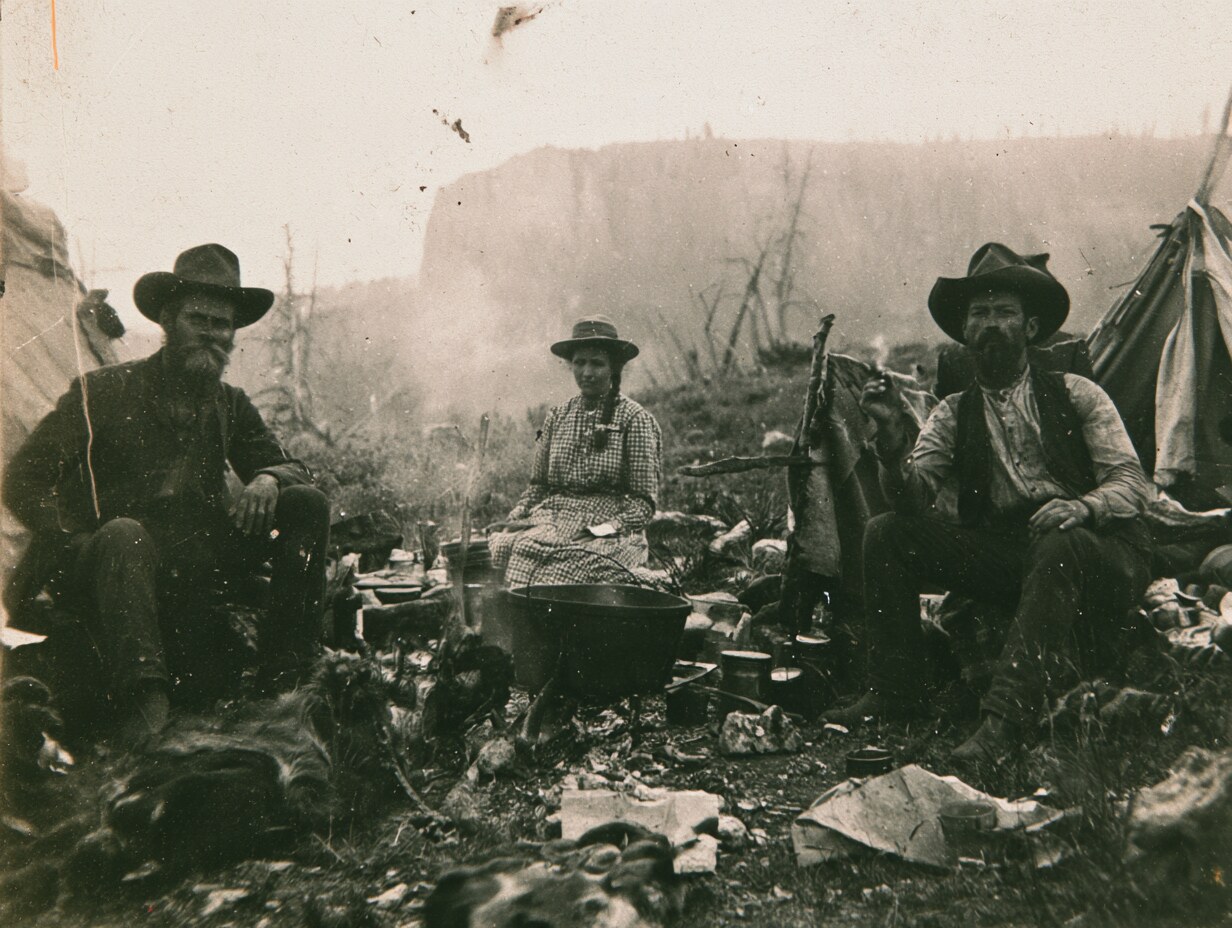
The frontier was a hungry place, for Native Americans and settlers alike, both forced to eat what they could find as they made their way across the wilderness. In that spirit of adventure, AWI scholars have combed through historical accounts of foodstuff preparation from 1740 to 1932 to offer three exciting recipes for you to try at home.
Squirrel Soup
The Kentucky Housewife, Lettice Bryan, 1839
Small game carried many a frontier household through lean seasons, and Bryan's 1839 manual for Kentucky's western settlements treats squirrel with the same unbothered practicality as chicken.
Take two fat young squirrels, skin and clean them nicely, cut them into small pieces, rinse and season them with salt and pepper, and boil them till nearly done. Beat an egg very light, stir into half a pint of sweet milk, add a little salt, and enough flour to make it a stiff batter, and drop by small spoonfuls into the soup, and boil them with the squirrels till all are done. Then stir in a small lump of butter, rolled in flour, a little grated nutmeg, lemon and mace; add a handful of chopped parsley and half a pint of sweet cream; stir it till it comes to a boil, and serve it up with some of the nicest pieces of the squirrels.
Bryan's own note follows, undiminished by two centuries: “Soup may be made in this manner of small chickens, pigeons, partridges and pheasants.”
Pork and Beans
Mrs. Crowen's American Lady's Cook Book, 1847
Dried beans and a hunk of salt pork traveled well and stretched further than almost anything else in the larder, which made this iron-pot preparation a fixture of wagon-train and homestead kitchens alike.
Take two quarts of dried white beans, (the small ones are best,) pick out any imperfections, and put them to soak in cold water, more than to cover them, let them remain one night; the next day, about two hours before dinner time, throw off the water; have a pound of nicely corned pork, a rib piece is best; put the beans in an iron dinner-pot; score the rind or skin of the pork, in squares or diamonds, and lay it on the beans, put in hot (not boiling) water to them, add a small dried red pepper, or a saltspoon-ful of cayenne; cover the pot close, and set it over a gentle fire for one hour; then take a tin basin, or earthen pudding-pan, rub the inside over with a bit of butter, and nearly fill it with the boiled beans, lay the pork in the centre, pressing it down a little; put small bits of butter over the beans, dredge a little flour over them, and the pork, and set it in a moderately hot oven, for nearly one hour…
— bake, in short, until the pork is well browned and the beans have taken on its color: a full afternoon's work for a full winter's meal.
Boudin Blanc (Prairie Sausage)
Journals of the Lewis and Clark Expedition — Meriwether Lewis, May 9, 1805
On the Missouri in the spring of 1805, the expedition's cook, Toussaint Charbonneau, turned camp butchery into something close to charcuterie. Captain Lewis recorded the process with evident relish: the casing began with “about 6 feet of the lower extremity of the large gut of the Buffaloe,” filled with a seasoned mixture of tenderloin and back fat, tied at both ends, then “baptised in the missouri with two dips and a flirt” and “bobbed into the kettle” to boil. The finished sausage, Lewis declared, was “one of the greatest delacies of the forrest” — his spelling, not ours.